Wednesday, December 9, 2009

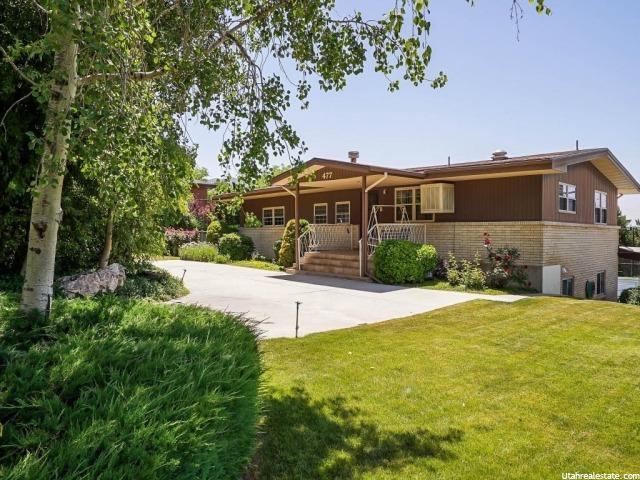
Be My Tenant: 2211 Jefferson FOR RENT

Many of you have wondered what kind of landlord I am.  Here is your chance to see inside one of my rental properties.  If you or anyone you know wants to be my neighbor, renting this unit is your chance.

Please consider:


Just $425/mo plus utilities.  Utilities are extremely low. 
I accept bad credit and deposits are negotiable.  Just no pets or smoke.

Monday, December 7, 2009

FOR SALE: Historic 1922 Craftsman Bungalow

Here is a home that I consulted with the owners to restore.  We now have it listed for sale:


And now for something more amazing, here is the before and after video:


Saturday, December 5, 2009

Photo of the Day: Design On A Dime


Looking for redecorating ideas?  Go for the indoor faux-shutter look this season.  I found this novelty while looking at bank owned property this week.

Friday, December 4, 2009

Three Bank Owned Property Tours: With Me As Your Host


661 27th Street - Bank Owned Tour


Here is a bank owned property that I thought was interesting.  I will have three more of these up over the weekend.  Enjoy your Friday.

Thursday, December 3, 2009

My Deferred Maintenance Timebomb Revisited


A couple weeks ago I shared with you Playing Hot Potoato: My Deferred Maintenance Timebomb. Well here is the second half of the story.

Shortly after demolishing the basement bathroom wall, I went upstairs to see what was happening to cause this mess. Here is a photo of the tub upstairs.


It looks nice right?  A clawfoot tub surrounded in tile.  Well, a closer inspection reveals that grout is missing in the seams and the tiles slope away from the tub.  To fix that, someone before had put silicone on all the grout lines and in the cracks.  I guess it worked for a couple years but now the band-aid has failed.  This was the source of all the problems.  I notified my tenants that I needed to remove the surround.  It wasn't an exciting sounding proposition for them but they agreed to let me do it to prevent further damage downstairs.  It took a full day and a morning but I was able to remove the surround, replace the faucet, and install a true clawfoot show kit.  Here is the tub now:


Even though the flooring under the tub is 60 years old (which will be corrected in the near future) I think the freestanding tub looks much better than the surround.  It certainly works much better.  The water stays inside the tub where it belongs.  .

Replacing the plumbing was a chore.  My 320-pound friend showed up to help and he put all his weight and muscle into turning the nuts to remove the faucet.  The corrosion was so bad that instead of releasing, the nuts just ripped in half.  So, when reworking your clawfoot tubs, make sure you have a strong man or a plumber on hand to get the hard work done for you. 


Tuesday, December 1, 2009

Ogden Architectural Treasures Part 1: Mormon Stake Center


Video presentation and storyline of one of Ogden's great landmark buildings.

Friday, November 27, 2009

Morgan Planners Befuddled By Strange New Ideas


The Standard Examiner has an amusing article this morning about county officials trying to make sense of an Envision Morgan study.  The study asked 700 citizens about how they wanted thier community to handle land use and development in the years ahead.  This seems similar to the Community Plan process that Ogden does for its various neighborhoods.

What is really interesting is that the county planner doesn't like the results of the study.  Here is a quote from county planner Grant Crowell:

“There appears to be a segment of the population not represented in Envision Morgan,” Crowell said. “People don’t like clustering and permanent preservation of open space. That’s what I’ve heard since I’ve been here.” 

And yet the study says:


“Morgan residents envision significant     open space conservation, with a goal of permanently protecting lands with a variety of uses and characteristics” including farms, ranches, river corridors, mountains, viewsheds, trails and recreation spaces, according to visioning documents.

Unless the 700 respondents were hand picked by Envision Morgan for their open space preserving bias, I would say that Mr. Crowell may be on shakey ground with his own community.  If participation was voluntary as the Ogden process is, then the neighbors that care the most (by showing up to meetings) win the most in the process.  The complaining that Mr. Crowell cites likely comes from folks who care so little about thier community that they failed to show up to any of the Envision Morgan meetings.

Ogden experienced a similar thing with the East Central Bench (Trolley District) Community Plan.  The inital meeting was presented in English AND in Spanish.  Unfortunately, there weren't any spanish speakers in the room that I could tell.  A translator was on hand even to help.  Given the 50% population of latinos in the community, it was shocking not to have a significant presence there at the meeting.  Even after we broke down into smaller steering committees for regular monthly meetings, the city staff had to compel some latino stakeholders to the meetings.  The meeting I attended where this was the case was very interesting. The stakeholder was quite disinterested in the meeting altogether and really didn't want to contribute to our discussions.   


The bottom line is that involved citizens will always steer the community in the best direction for involved citizens.  That is how democracy works.  Morgan leadership would be wise to listen to their community.    


Tuesday, November 24, 2009

Following the Numbers....


In a follow up to yesterday's somber post, I thought I would review the numbers and try to determine the implications of a possible change in FHA lending and interest rate increases.

What I found was pretty surprising.  Here are the results in an easy to digest graph form (click to enlarge):


This first graphs shows the minimum out-of-pocket expenses allowed under FHA rules.  The best case scenario for current buyers it to put 3.5% down on the home and have the seller pay closing costs.  Under proposed changes to the guidelines, buyer's closing costs would increase by .5% of the purchase price and sellers would only be allowed to pay up to 2% of the purchase price in buyer's closing costs.  On top of that, buyers would need to bring 5% of the purchase price to closing for a down payment.  The premium price scenario is slightly better since the interest rate on the loan could be increased so yield-spread could be used to pay for some closing costs.  However, given yield-spread's limitations, its not a huge help.

These simple changes to FHA guidelines would more than double what current buyers need to bring to the table.  If these changes take place, expect to see a buyer's exodus out of the market because they simply haven't saved enough cash to buy a home.  Although I support FHA tightening its belt, it means Realtors will need to tighten theirs too...yet again...


The next chart demonstrates what kind of payment shift our market may experience over the next year or so as interest rates increase.  The Fed is scheduled to stop buying Fannie Mae and Freddie Mac mortgage debt in March of next year.  Also, in April, the first time home buyer tax credit is set to expire.  The tax credit doesn't affect interest rates, but interestingly, demand for housing should peak with the expiration of the tax credit just as the Fed starts to allow mortgage rates to increase.

The chart above shows you what a payment would be like for a $100k purchase given different interest rate scenarios combined with a change in FHA rules.  Rates are expected to jump just a half a point.  However, market forces may push them up higher later.  The implication is that buyers qualifying for first time homes are going to want to keep thier payments within thier budgets.  If they can't increase their payments, they need to buy less home.

Hence, our next chart. This chart reveals what a buyer's payment on a $100K home is today versus what that very same payment will buy them under new FHA guidelines and higher rates.     


 As you can see, if rates just go up to 6.875% instead of today's 5%, the same family that bought a 100K home will only be able to afford an $83K home.  I can tell you there is a pretty big difference between a $100,000 home and a $83,000 home.

This downward shift in purchase power would apply across all classes of homes.  It means that people will be compensated for coming to the closing table with larger down payments. The more down...the lower the payment.  It makes sense.

I don't think we are in for a shock in interest rates. However, what I do believe we are in for is a slow but steady increase in rates as our economic equilibrium finds itself and we get back to the old-timer practice of putting money away for savings.  The big shock, if it comes, will be the changes to FHA.

Like the good squirrel, I am stashing nuts away in my tree for such an occasion.

Monday, November 23, 2009

WARNING: Troubled Markets Ahead


I wrote last month about how FHA has been facing problems keeping its losses from foreclosure under control and some of the proposed solutions.

Yesterday I read more on the issue.  FHA is looking at many options but here are a few that are on the table:

  • Higher Downpayments - raising downpayments from 3.5% to 5%
  • Higher Mortgage Insurance Premiums - increase mortgage insurance premiums from 1.75% to 2.25% of the loan amount
  • Cut Seller Concessions - Cut allowed seller concessions from 6% of purchase price to just 2%.
  • Tighter Underwriting Guidelines - move to risk-based lending rather than today's generous model
These are some significant changes if they are implemented.  In discussing this situation with a loan officer collegue, he indicated that it may be possible to "premium price" loans so that many of these expenses can be paid for the buyer.  In other words, since lenders give financial incentives to brokerages to sell higher interest rate loans, increasing the loan interest rate above prevailing par rates could provide enough incentive money to pay for buyer closing costs or MI premiums.  The drawback of course is that mortgage payments go up when you increase rates and since buyers shop for payments more so than price points, they must be willing to accept less loan (and home) for the same payment.  It means buyers will have to expect to get less home for their money...an awkward adjustment at best.

Now the big question is WHEN will FHA make these changes?

That brings us to the next interesting piece of news.  Interest rates have been incredibly low of the last year because the Fed has been buying Fannie Mae and Freddie Mac (Agency) mortgages.  This artificial demand for agency mortgages has pushed rates down. The Fed can't buy the debt forever.  In fact, we know the date that they are scheduled to stop buying - MARCH 31, 2010.

What will this do to rates?  By all estimations, it will increase rates .3 to .5 above where they are today.  So, if rates jump up after the Fed purchases end, and FHA drops the hammer on guidelines, we may see another round of market contraction sometime in 2010.  It will be tough to "premium price" a mortgage if the rates are already inflated due to natural market conditions.  If this scenario plays out, we may actually not be at the bottom of sales volume or pricing for homes yet.

Although I am encouraged that most of the excesses have been blown off from the market bubble in Utah, we are entering a new phase of shifting fundamentals that include structurally high unemployment and wacky government interference.  Unemployment doesn't scare me, the market has already been priced to our existing unemployment.  It's the government interference in the market, however, that keeps the ship rocking.

Lets brace ourselves for a very interesting 12 months ahead.